Anki & Spaced Repetition Systems
Use software like Anki to generate digital flashcards based on your course notes. The algorithm schedules reviews automatically based on your performance, ensuring you study at the precise moment of forgetting.
By Sarah Jenkins • June 24, 2025 • 12 min read
We live in an era of infinite content. The internet offers a buffet of tutorials, videos, and articles. Yet, professional competence rarely grows from this passive consumption. The "binge-learn" model—consuming a 4-hour course in a single sitting—optimizes for dopamine hits, not retention.
When you rush through material, you reach the end with the confidence of mastery and the memory retention of a sieve. The brain, designed for efficiency, discards information it perceives as non-essential. To move from information to knowledge, you must disrupt the brain's natural tendency to forget. This is where the science of spaced repetition comes in.
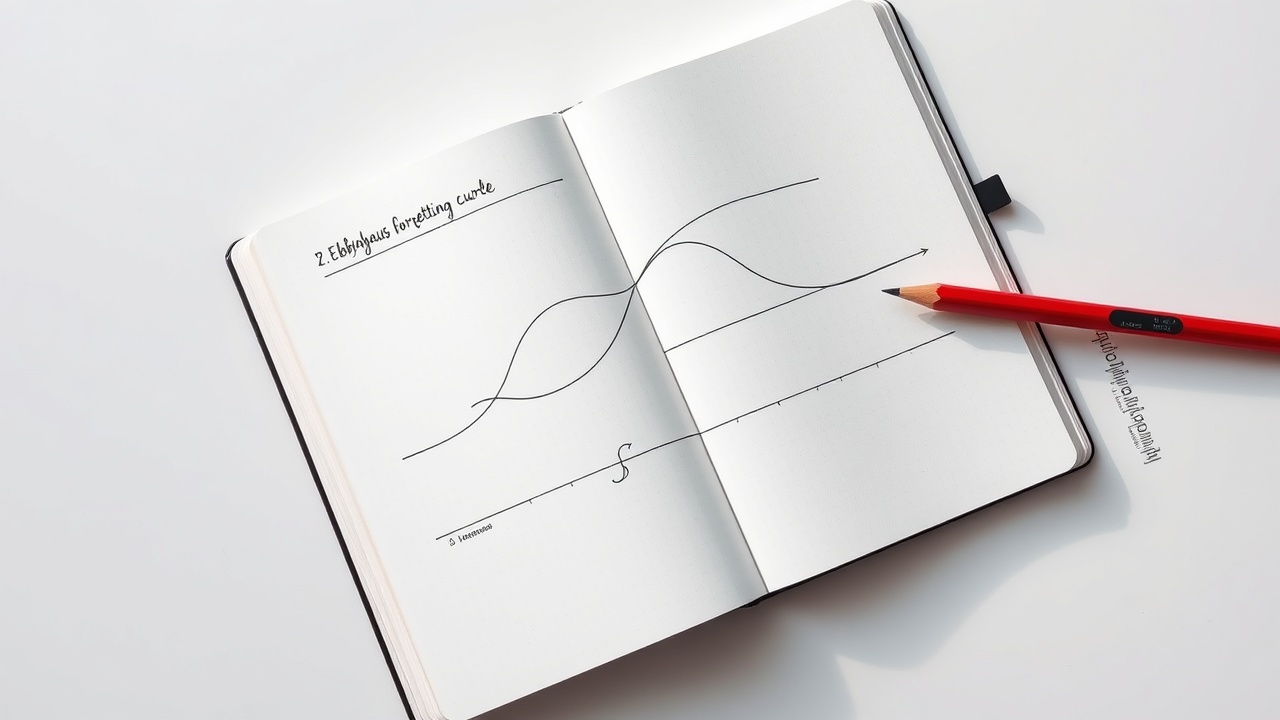
Psychologist Hermann Ebbinghaus established the "Forgetting Curve" in the late 19th century. His experiments revealed that without intervention, we forget approximately 50% of what we learn within one hour, 70% by the end of the day, and 90% within a week.
Spaced repetition is the specific technique to counteract this. Instead of reviewing information all at once (massed practice), it breaks learning into intervals: 1 day, 3 days, 1 week, 1 month. Each review strengthens the neural pathway, shifting the curve downward. When you review at the optimal moment—just as you are about to forget—you maximize retention with minimal cognitive load.
Implementing this in a traditional MOOC is difficult because the pacing is usually self-directed and rigid. Launchly solves this through our cohort-based structure. We don't just release a video; we release a module with a specific deadline.
Our system is built on micro-assessments. After learning a concept, you cannot proceed to the next lecture until you demonstrate competency on a spaced quiz. This ensures that the information moves from short-term to long-term memory before the next concept is introduced. The cohort creates a social rhythm that reinforces the scientific rhythm.
Use software like Anki to generate digital flashcards based on your course notes. The algorithm schedules reviews automatically based on your performance, ensuring you study at the precise moment of forgetting.
Teach the concept to a peer or an empty room. The struggle to articulate the idea identifies gaps in your understanding, prompting a targeted review of the specific area where you faltered.
Study in focused 25-minute bursts. This prevents cognitive fatigue, ensuring that each review session is high-quality rather than a rushed grind.
Knowledge, Structured.
Don't just consume. Retain. Join a cohort designed to leverage the science of spaced repetition for real career growth.
Why isolation is the enemy of progress in online education.
A deep dive into the first module of our Design Track.
Tools and systems for managing professional knowledge.
Discussion is closed for this article.